Bogles, but Different
A Case Study in Historic Inspiration and Recontextualization
by Quentin C.
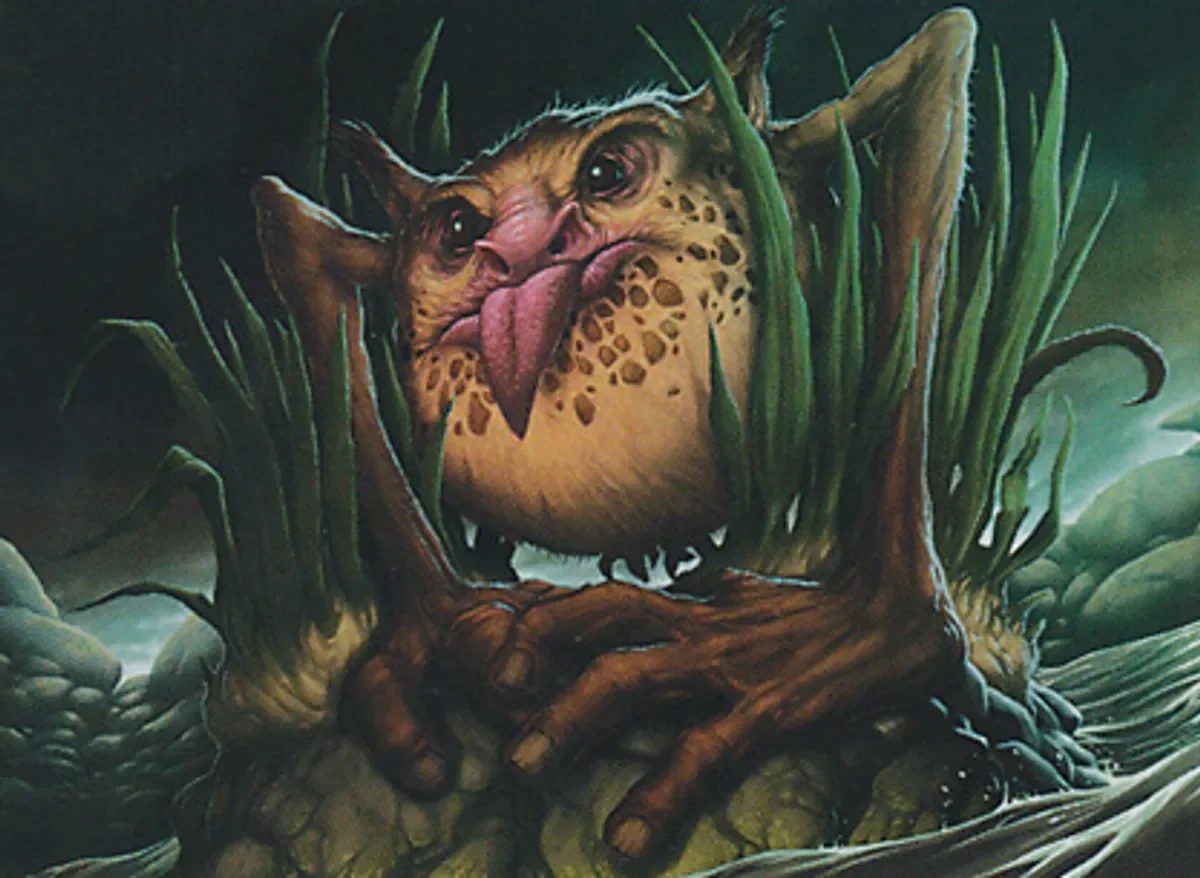
Slippery Bogle illustrated by Dave Allsop
A cursory glace would lead you to believe nothing special is going on with Bogles in Season 11. However, diving deeper reveals how the deck breaks away from over a decade of traditional aggression to something much more interactive. In fact, it is out of necessity that Azorius Bogles is built as a tempo deck loading up an untouchable threat with auras while disrupting the opponent’s attempts to outrace said threat.
Presenting a Clock
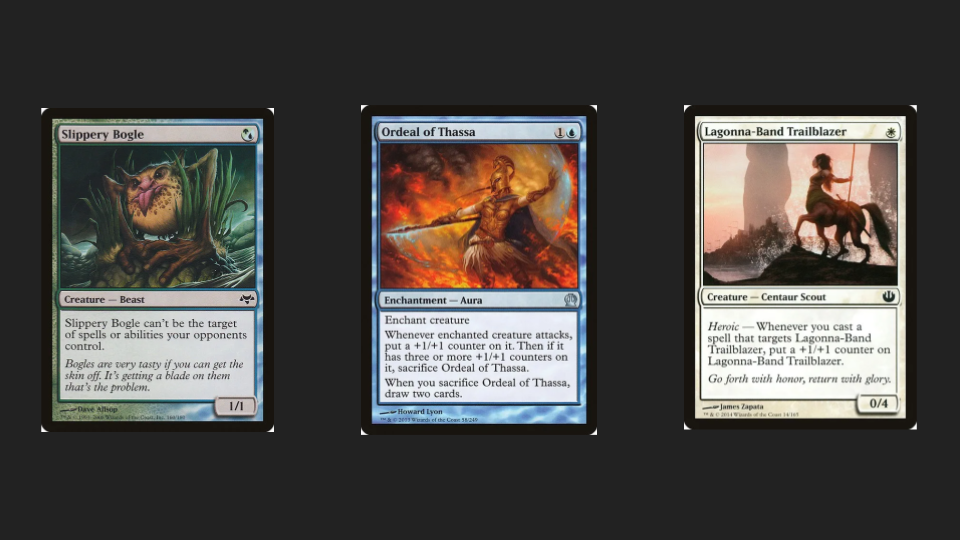
The “untouchable” creatures need to grow immediately
When both Slippery Bogle and Bassara Tower Archer are available as cheap threats, it is easy to think that the Bogles archetype has something going for it. But when looking at power, Season 11 offers nothing near that of Ethereal Armor, All That Glitters, Ancestral Mask or Rancor to really throw haymakers. Its best option for damage is the Ordeal Cycle, but these enchantments are slow to build up. To present a reasonable clock and attack past even the most modest of creatures, Bogles needs a turn 1 creature for these Ordeals to come down on turn 2. Suddenly, Basara Tower Archer is too slow for what the deck needs to do and things are looking dire.
We need a hero; we need Lagonna-Band Trailblazer. While it isn’t a “true bogle”, it is hard to kill for any non-black deck. Even against Black, it is quickly out of range of Bile Blight, Drown in Ichor and Dismember. It withstands Drown in Sorrow and Anger of the Gods where Slippery Bogle and Bassara Tower Archer would fall. Critically, Lagonna-Band Trailblazer lessens one of the biggest weaknesses of the deck-- its slow clock. Gaining extra +1/+1 counters makes it feel like it’s wearing an Ethereal Armor, allowing it to attack more often and pop Ordeals sooner.
Turning to Tempo
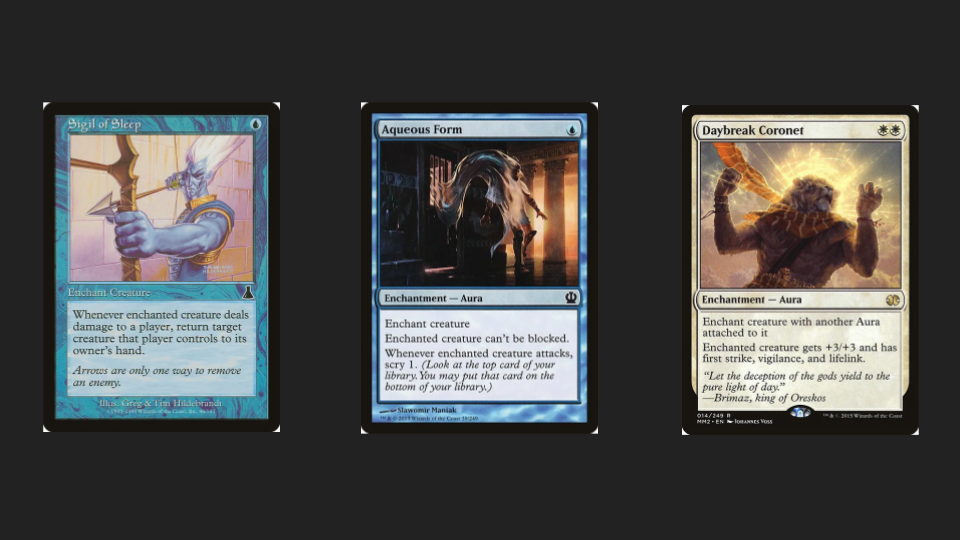
Try racing an unblockable beater without any creatures!
Still, the deck is unable to present a fast clock, so how do we make sure that we don’t lose while still presenting a respectable damage output? The answer is to shift to a tempo-oriented position, keeping the opponent off balance with interaction long enough to get across the finish line. In other words, we need interaction to push damage over time because we don’t have the burst that traditional Bogles does.
Without Curiosity nor Kor Spiritdrancer to refuel the hand, some other repeated advantage is needed to sustain this tempo plan and Sigil of Sleep is the answer. Aqueous Form and Stratus Walk guarantee Sigil of Sleep connect, and when the opponent can’t deal with a “bogle”, their only plan becomes to try to outrace it. But in the wise words of Sun Tzu, “Bounce the opponent’s creatures and it makes it really hard for them to kill you.”
“Sun Tzu’s Strategy” helps fill out the other forms of interaction. Serum Snare is a catch-all with the added benefit of proliferating +1/+1 counters from your Ordeals. Remand buys time while letting you draw closer to Daybreak Coronet. Swan Song acts as additional boardwipe and edict protection, where the 2/2 Bird is inconsequential. Planar Disruption is chosen over Ossification because of the low Basic Land count and because it can hit important artifacts like Cranial Plating, Powder Keg, and The Filigree Sylex. Lifegain from Ordeal of Heliod and Daybreak Coronet make it even harder to race.
Sideboard Considerations
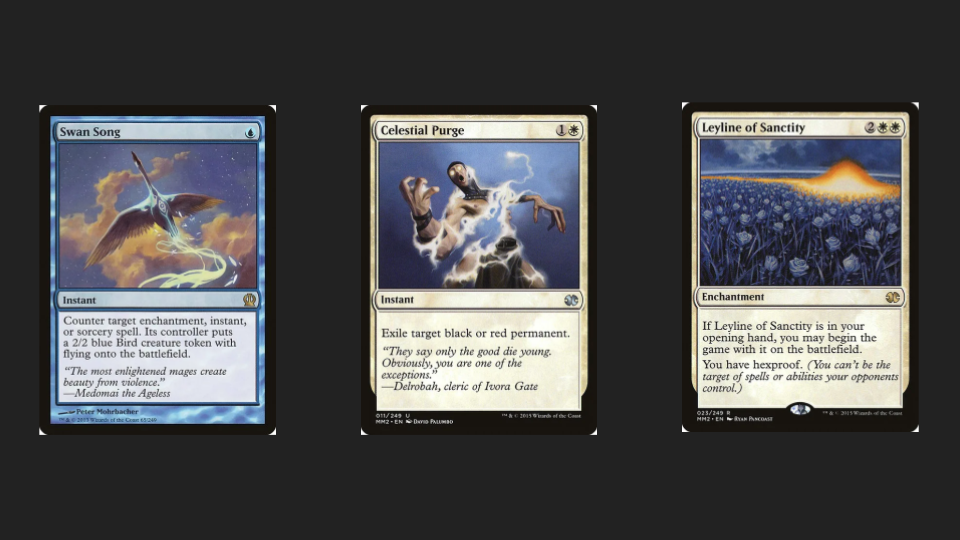
The sideboard is dedicated to protection and winning the damage race
Mask of Law and Grace prevents damage from Anger of the Gods and Wildfire, protects Lagonna-Band Trailblazer from black removal, and pushes damage through Bitterblossom.
Swan Song counters Sheoldred’s Edict and board wipes while reliably pushing key enchantments through counterspells.
Celestial Purge deals with hard counters like Glissa Sunslayer and the problematic Migloz, Maze Crusher. It also deals with racing threats like Stigma Lasher, Urabrask’s Forge and Bitterblossom.
Hurkyl’s Recall buys time against Powder Keg and The Filigree Sylex to protect your creatures. It also helpls outrace Affinity and dip under Proliferate Control’s White Sun’s Twilight.
Dissolve is just a catch-all protection spell.
Leyline of Sanctity helps outrace Burn and Venerated Rotpriest Toxic.
Conclusion
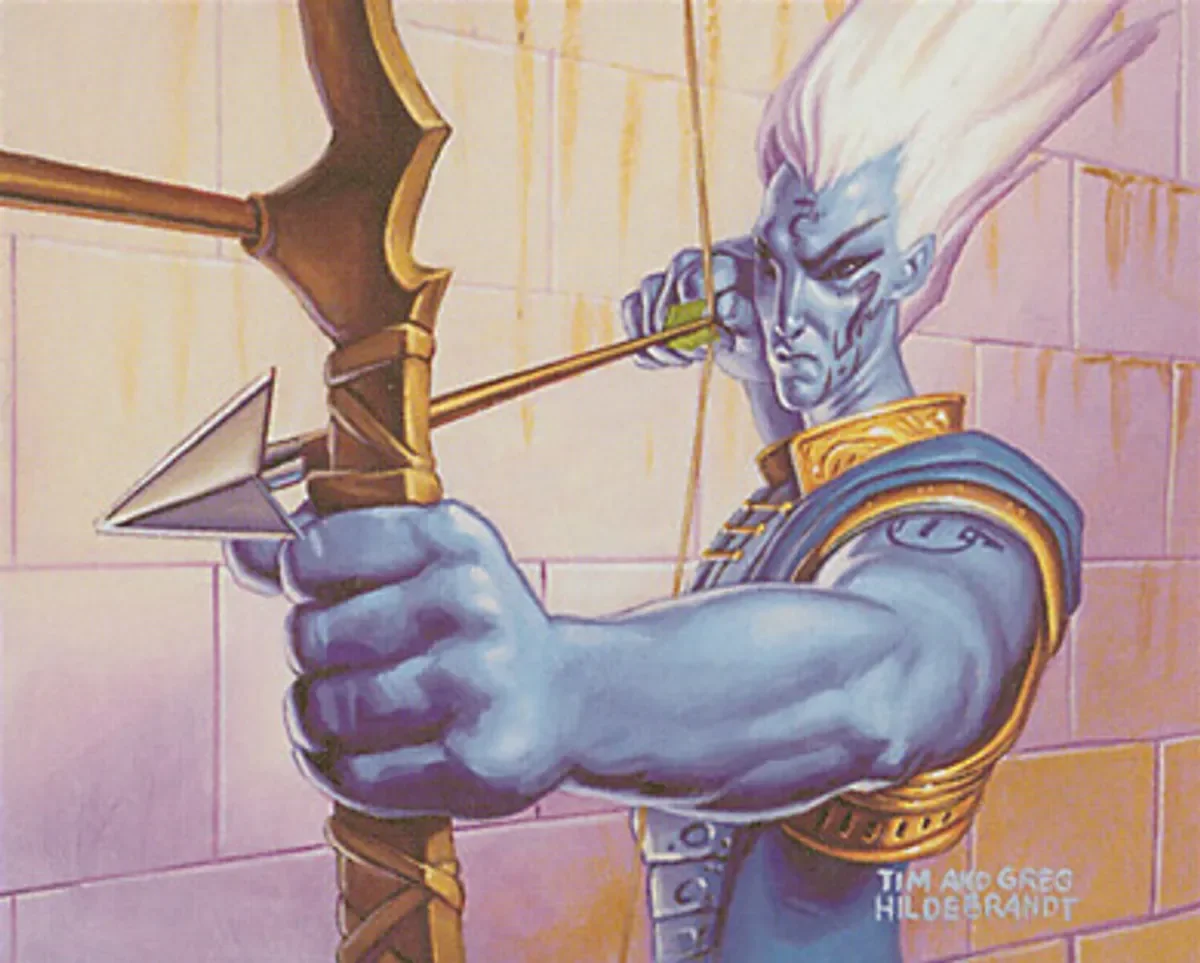
Sigil of Sleep illustrated by Greg Hildebrandt & Tim Hildebrandt
When building a deck, it’s helpful to gain inspiration from historical precedent. However, the beauty of Fantasy Standard’s card pool restriction is how it asks brewers to find clever new ways to make iconic cards work. Azorius Bogles turns what has always been a deck impossible to interact with into a deck that is full of interaction itself.
Additional Reading
Urza’s Glasses illustrated by Douglas Shuler