Season 11 Mana - Lands
Written by Quentin C.
Your lands do everything!

Mana Confluence illustrated by Richard Wright
From protection to win condition and from card selection to ramp, Season 11’s land base holds a variety of tech options beyond mana fixing. Even basic lands play a critical role in amplifying certain spells to the next level. Let’s explore the interactions between these lands, and how they interact with the card pool at large.
The Fast Lands
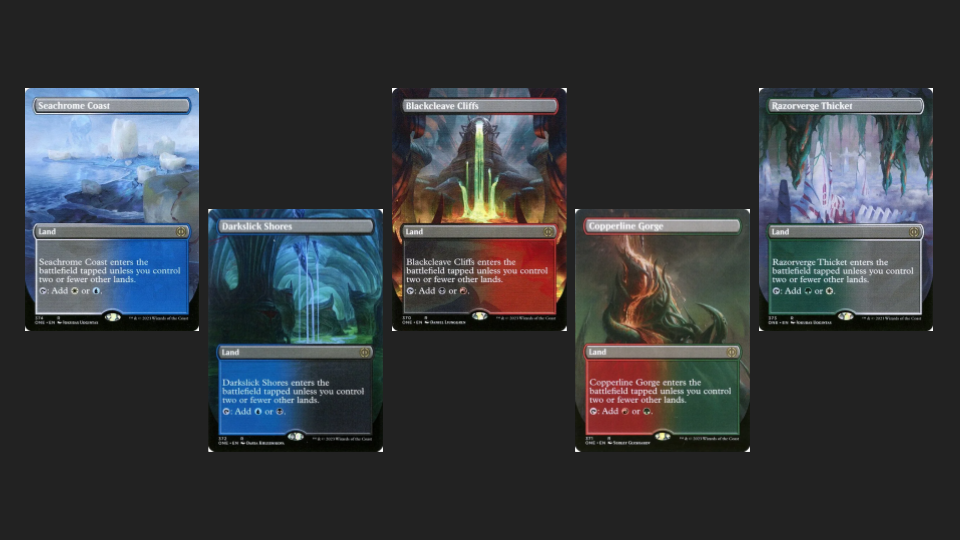
Enables action-packed early turns
The Phyrexia: All Will Be One (ONE) Fast Lands are allied duals that enter untapped if they are one of your first three lands. While they encourage proactive and early plays, slower decks might also want the ability to thwart such plays from their opponent with these untapped lands.
In wedge color combinations (Esper, Grixis, Jund, Naya, Bant), these Fast Lands overlap in their central color to make splashing a third color easier in proactive/early decks. On the other hand, a slower Esper deck might want to avoid registering all eight of their fast lands if they could get scry value attached to a later, tapped land.
The Scry Lands
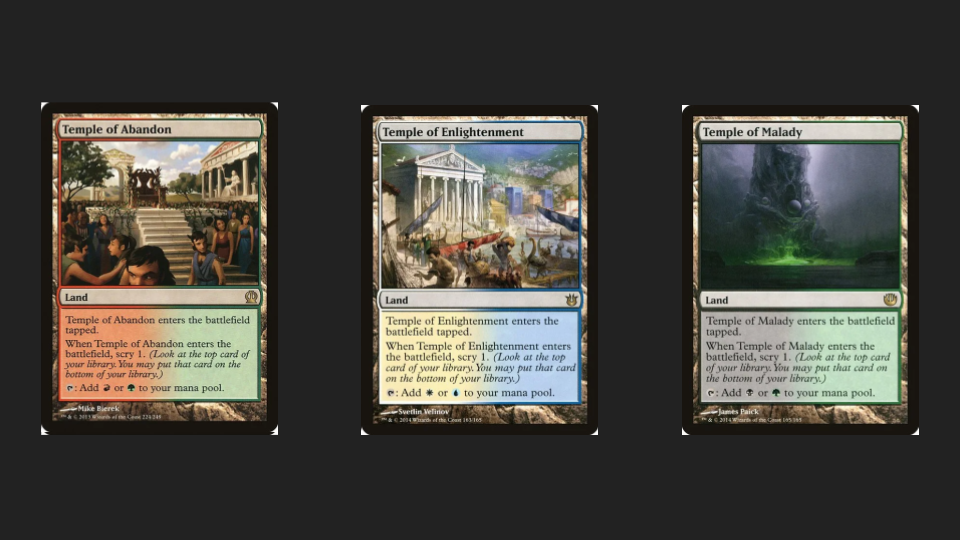
Smooths out mulligans and mitigates mana flood
The Theros Block Scry Lands are tapped duals that scry one when they enter and are available in all ten color pairs. Yes, the tempo loss of early tapped lands stings and you will need to make sure you can meet/break parity as a result. However, their consistency and stability in mana-production makes Scry Lands much more reliable than other options for decks looking to capitalize during the mid and/or late game.
Efficient card draw and card selection appear light this season, so having “scry 1” stapled to your manabase is powerful. Combining them with the few card engines available will be even more powerful, like dodging a Dark Confidant trigger that you couldn’t afford or bottoming an irrelevant spell you see from your Courser of Kruphix. If you really need to dig towards a particular spell, you can even scry before something like a Telling Time to get one deeper in your search.
The Bounce Lands
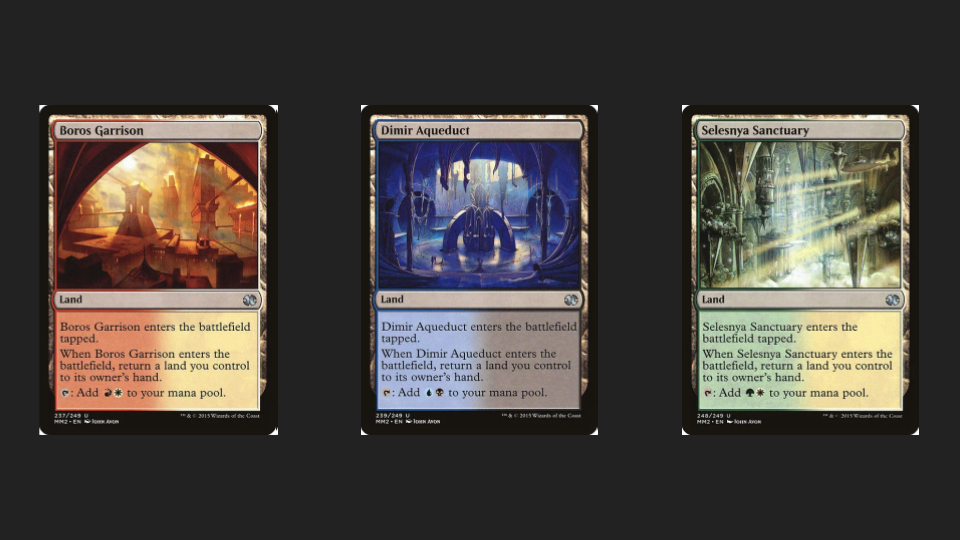
Risky, but many creative payoffs
The Modern Masters 2015 Bounce Lands are tapped duals that return a land you control to your hand when they enter, but tap for two mana. They are available in all color pairs. Bounce Lands combo with the Scry Lands for extra selection and extend Fast Lands’ untap window. Even without these interactions, Bounce Lands still provide card advantage by effectively “drawing” a land on their own.
Extra lands are powerful beyond ensuring a curve out. Picked up lands can be used on retrace spells. A turn two Bounce Land could have you discard to hand size, which might actually be a good thing for reanimator and Replenish decks. Bounce Lands also amplify untap effects like Kiora’s Follower, Prophet of Kruphix and Treachery.
Bounce lands work best with some amount of early sorcery-speed spells, as you are able to tap the land for mana before you return it to hand. Along with the inherent tempo risks of tapped lands, Bounce Lands are extra vulnerable to Fulminator Mage, Cryptic Command and Opposition.
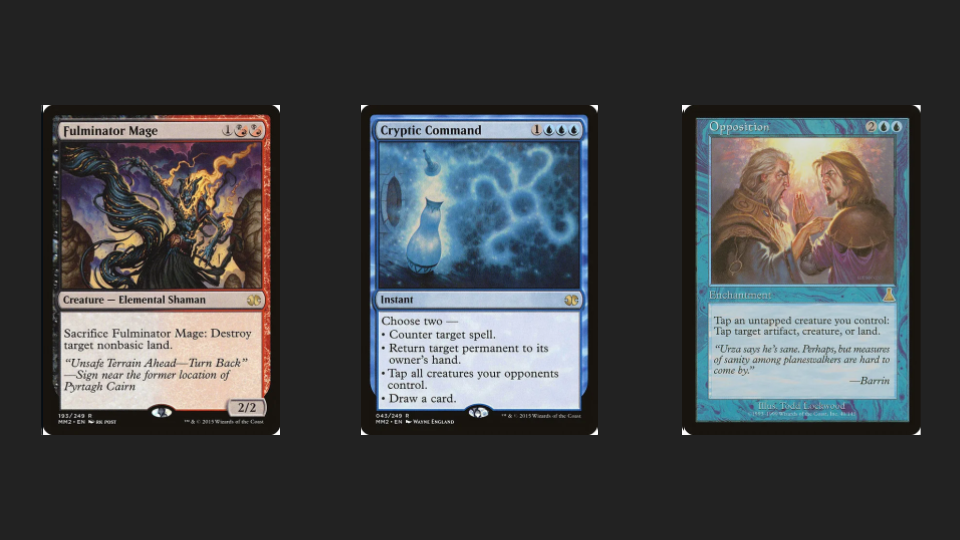
Not the only land interaction, but probably among the most common
The Filter Lands
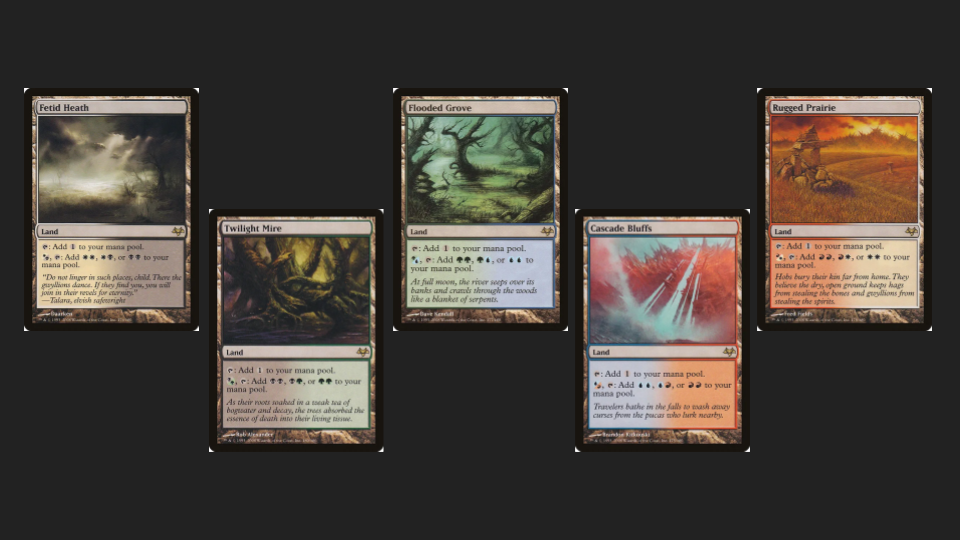
Facilitate ambitiously-costed spells in multicolor decks
The Eventide Filter Lands are untapped enemy duals that tap for a colorless and can filter one pip of their identity into two mana of any combination of their two colors. In this format, they help round out tri-color decks in combination with the Fast Lands.
Many powerful cards have restrictive mana costs and they can dominate a game when played timely. The Filter Lands make ambitious costs much more attainable on-curve. Splashing a double-pipped card isn’t so much of a stretch either, when done responsibly.
Similarly to the Bounce Lands, Filters are also vulnerable to mana disruption. If your opponent takes out your colored sources, the Filter Lands start looking like Season 8 Reflecting Pools. Additionally, Filters work best when all mana is spent at the same time— it can be difficult to cast multiple spells in different phases in a turn. In the example below, the player can’t play Charging Badger here and protect it with Minor Misstep on their end step.
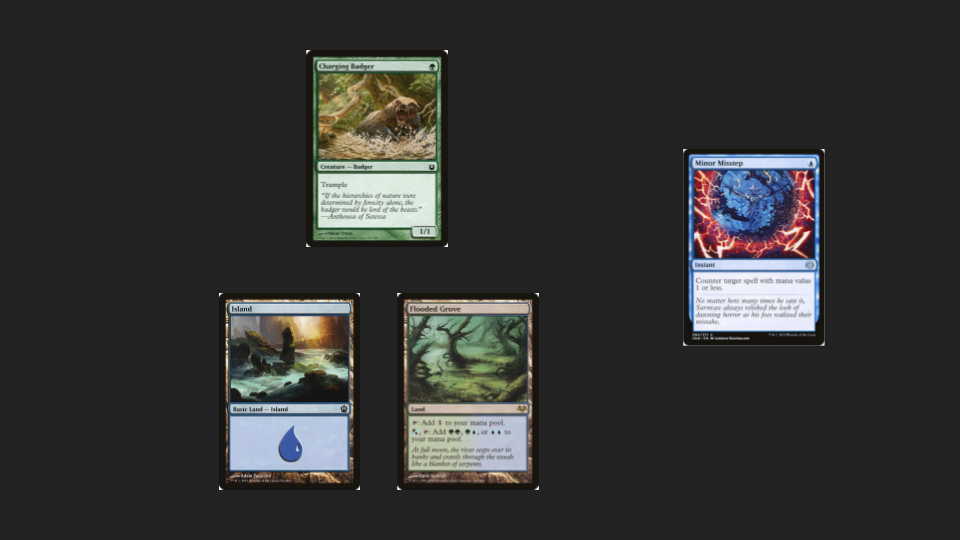
As phases come to pass, your mana doesn’t last
The Rainbow Lands
Rainbow Lands are always going to have some sort of downside, but they will always see play.
Mana Confluence will be best in proactive decks that look to finish the game through quick aggression, have plenty of defensive tools in conjunction with pressure, and/or gain the life back somehow.
The Seedcore is likely to only see play in hyper aggressive creature decks, specifically Toxic variants that can take advantage of the Corrupted bonus to push extra damage.
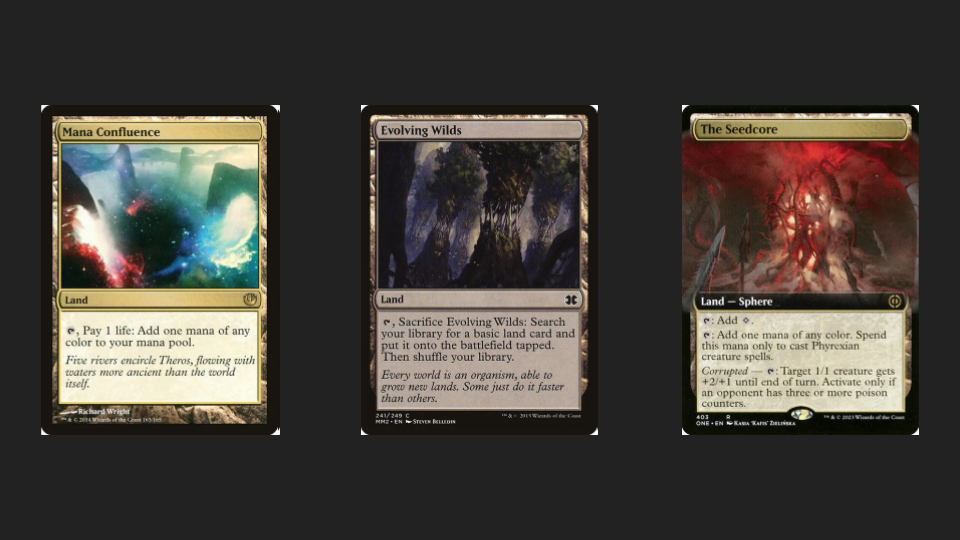
Power, at a price
Evolving Wilds and Terramorphic Expanse require you to lock into a particular color, but in a painless and resilient way. These fetches and the ONE Spheres synergize with Tarmogoyf, Courser of Kruphix and Conduit of Worlds for extra value within the mana base.
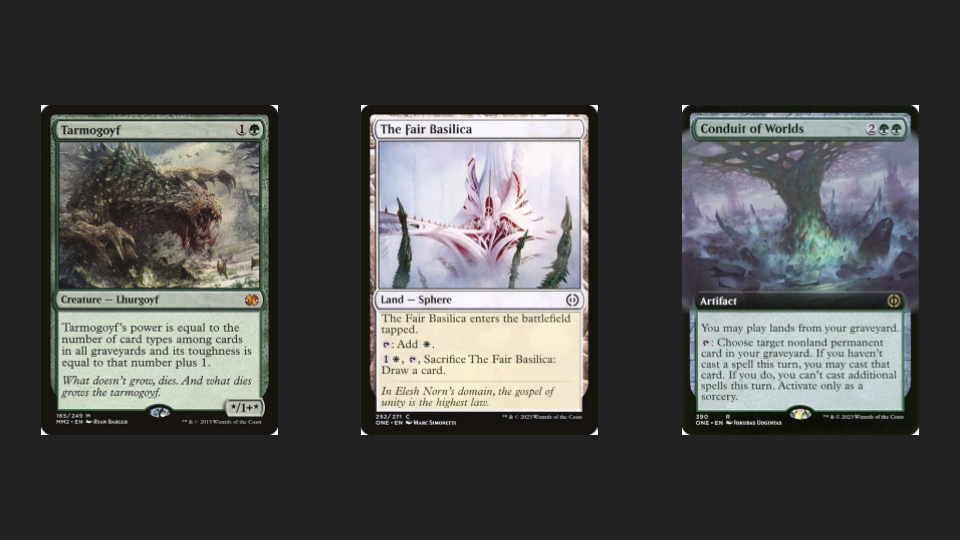
“Draft chaff” lands have some unique synergies this season
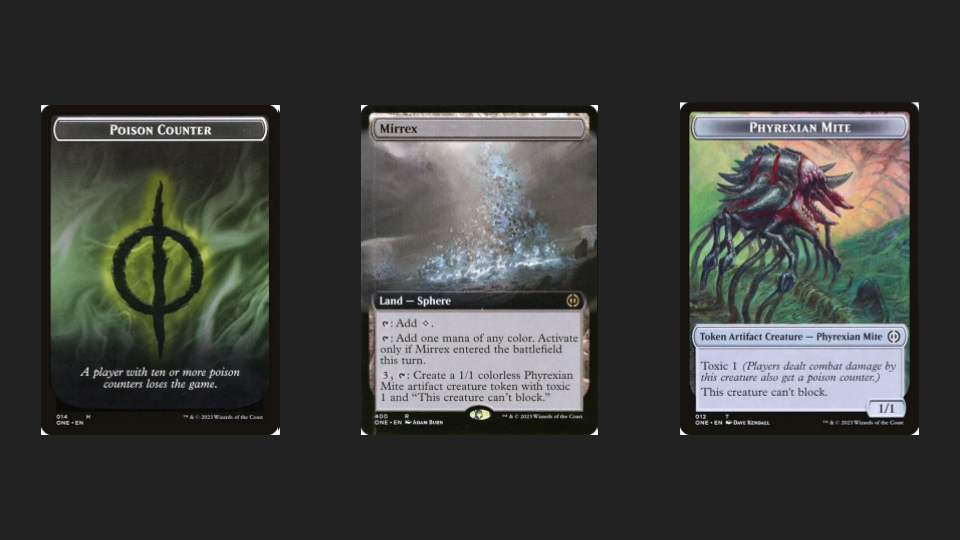
Mirrex is a self-contained win condition that asks its opponents to close out the game before they take 10 poison damage. With the amount of proliferation in MM2 and ONE, even a single mite’s bite can be the beginning of the end. Aggro Toxic can close out the final points of poison after they have run out of gas. Midrange decks can use their removal to clear the way for their mites while producing constant threats. Control decks can be lighter on wincons, holding up interaction and Mirrex simultaneously.
The mana burst of Mirrex is great for early developmental plays, but quickly becomes a blight for the unprepared. Developing multiple pip-intensive cards in succession is difficult, as is trying to cast a reactive spell in the first couple of turns.
If you can afford it, you want it
Archetypal Lands
The final couple of lands ask you to build around them.
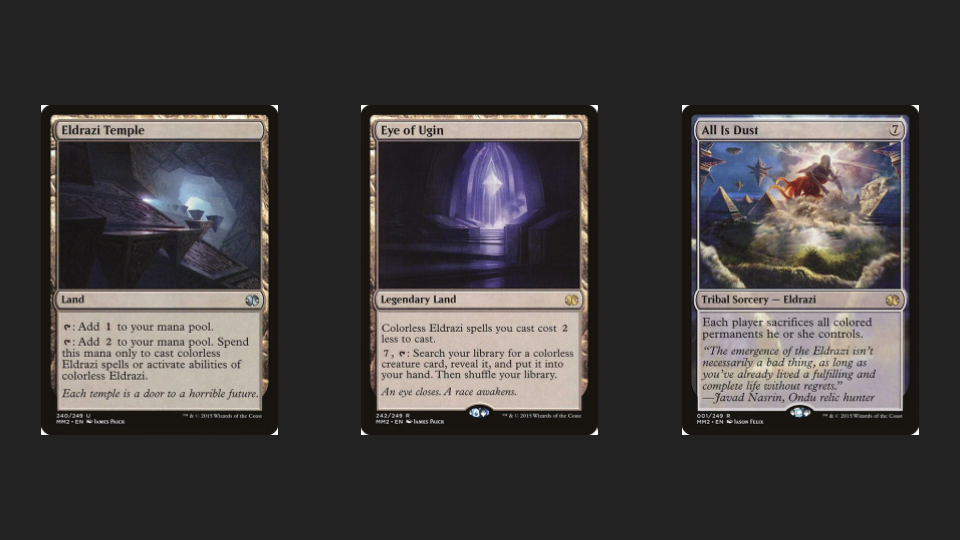
Eldrazi Temple and Eye of Ugin don’t have the critical mass of early Eldrazi to support a dedicated typal deck. However, they can be fetched off of Primeval Titan to cast Kozilek/Ulamog the following turn or to grab one of these Eldrazi for the turn after that. Some mana-stable control decks might use Eldrazi Temple to cast an early All is Dust.
Land ramp for Primeval Titan and colorless decks
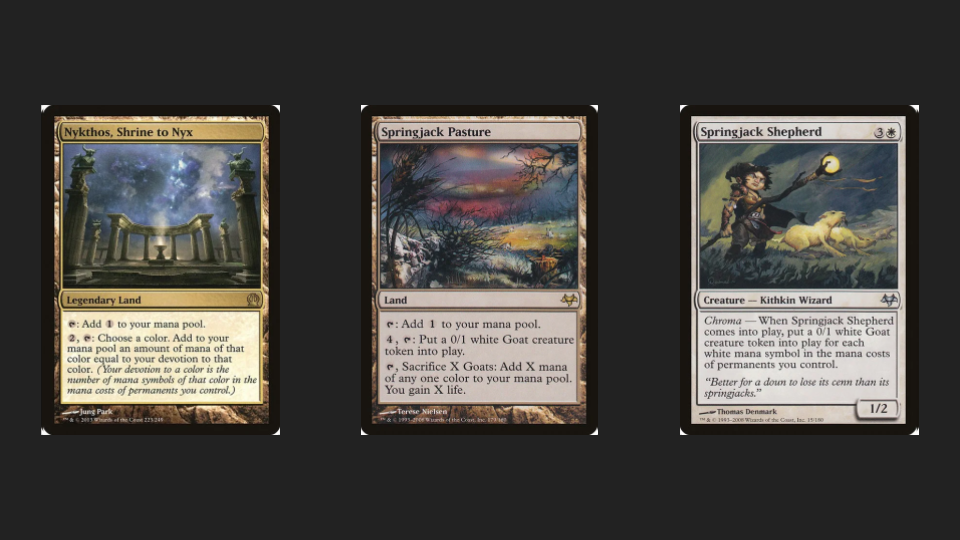
Nykthos, Shrine to Nyx might be another land to fetch off of Primeval Titan. When combined with Voyaging Satyr or Kiora’s Follower, mana generation goes off the charts! In general, Nykthos asks brewers to prioritize pip-potent permanents over other instants/sorceries with similar effects. Eventide not only enables Nykthos with pip-potent permanents, but its Chroma mechanic acts as additional devotion payoffs besides those from Theros Block. Springjack Pasture does a bad Mirrex impression, but also does a Nykthos impression when paired with Springjack Shepherd in a white devotion strategy.
The devoted are rewarded with bursts of mana
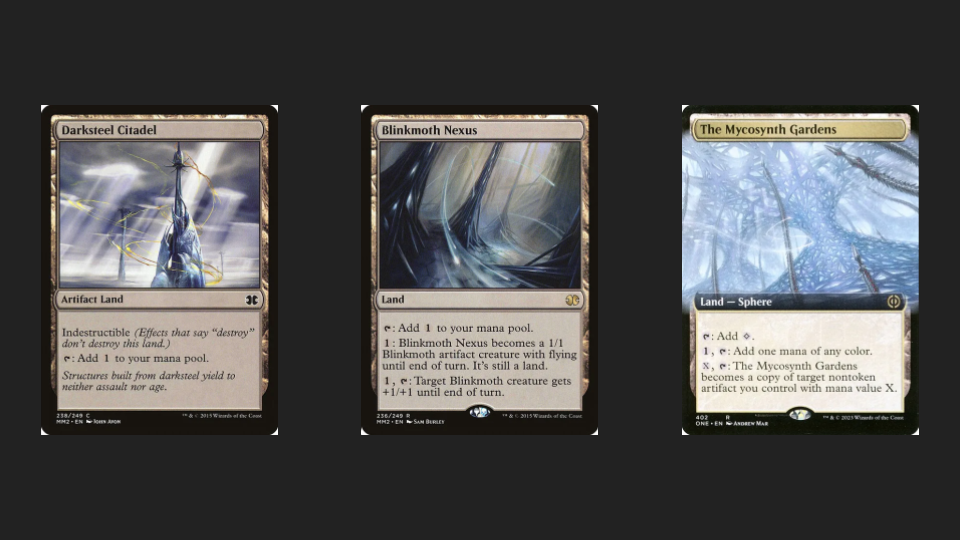
Affinity has a couple of tech lands to support it. Darksteel Citadel adds to your artifact count. Blinkmoth Nexus can also add to artifact count and be an evasive carrier of Cranial Plating. In a pinch, activating Blinkmoth Nexus can protect your Etched Champion from a Sheoldred’s Edict. The Mycosynth Gardens can become an extra copy of your best artifact after fixing some mana.
Colorless, but flexible in their applications
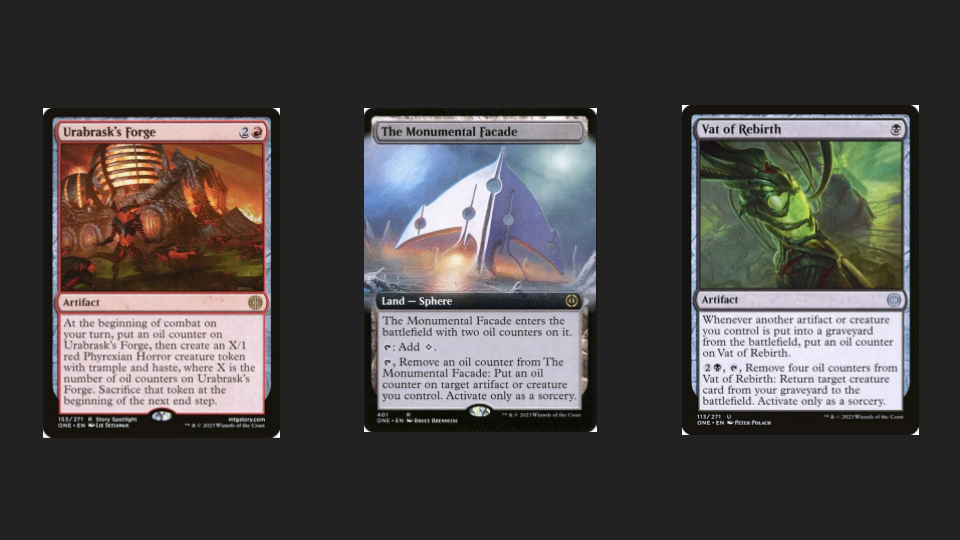
Finally, The Monumental Facade rewards those who play permanents that care about oil counters. It shines when paired with the proliferate mechanic, as the land adds the first counter on the desired permanent and proliferate adds another while refueling The Monumental Facade. Some of the most notable cards to stockpile oil onto include Urabrask’s Forge and Vat of Rebirth, but even just an extra counter or two on a Mercurial Spelldancer or The Filigree Sylex can turn the tide of a game.
Fringe, but valuable in the right deck
Basics
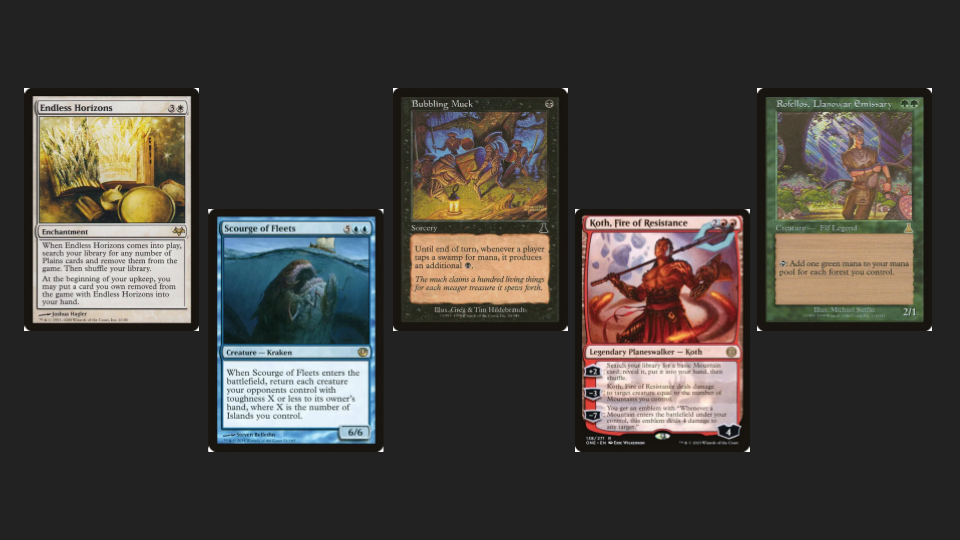
Basics are the only lands in Season 11 with basic land types. Those who fill their deck full of basics of the same type will be able to leverage the powerful cards shown below. While you miss out on the strengths of multiple colors, you may look to lean even harder into a mono-colored strategy with Nykthos, Shrine to Nyx and other devotion cards.
Pseudo devotion cards that reward playing many basics
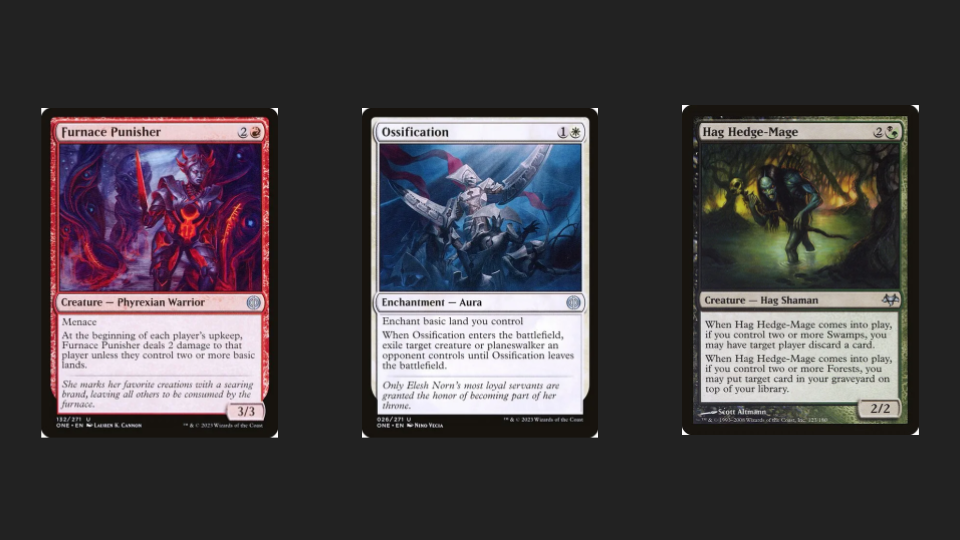
Multi-color decks will want to make sure they are playing enough basic lands too. Furnace Punisher double dips in dealing damage to those with greedy mana bases. Ossification and Chained to the Rocks are efficient removal options that require basics to be cast. Eventide’s Hedge-Mage cycle rewards those who play many basics and can be combined with Nylea’s Presence to more consistently trigger both modes.
Basics enable certain abilities and avoid others
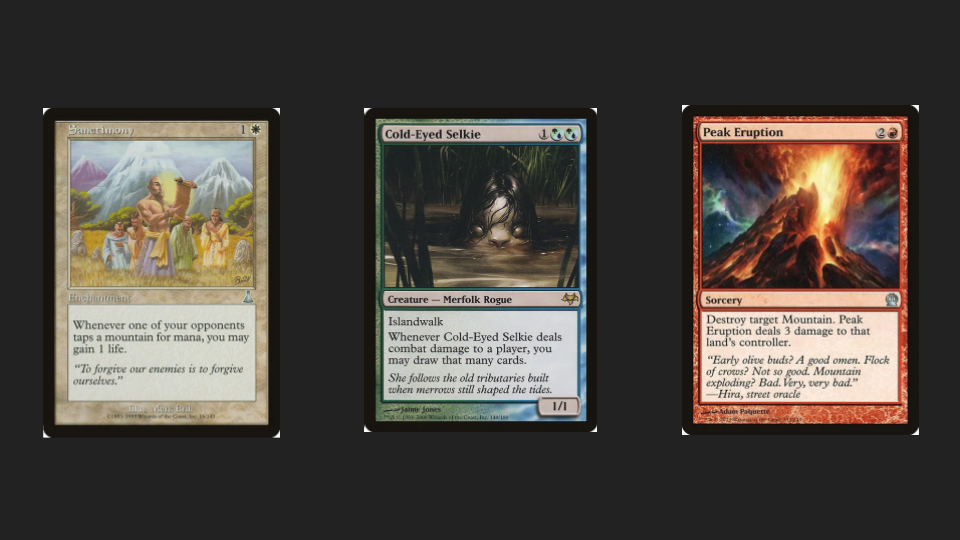
There aren’t many downsides to basics besides their opportunity cost, but they do exist. Sanctimony punishes mono-red decks that can’t deal consistent damage with little investment. Three landwalk creatures become unblockable and two land destruction spells target specific land types.
Some sideboard tech
Conclusion
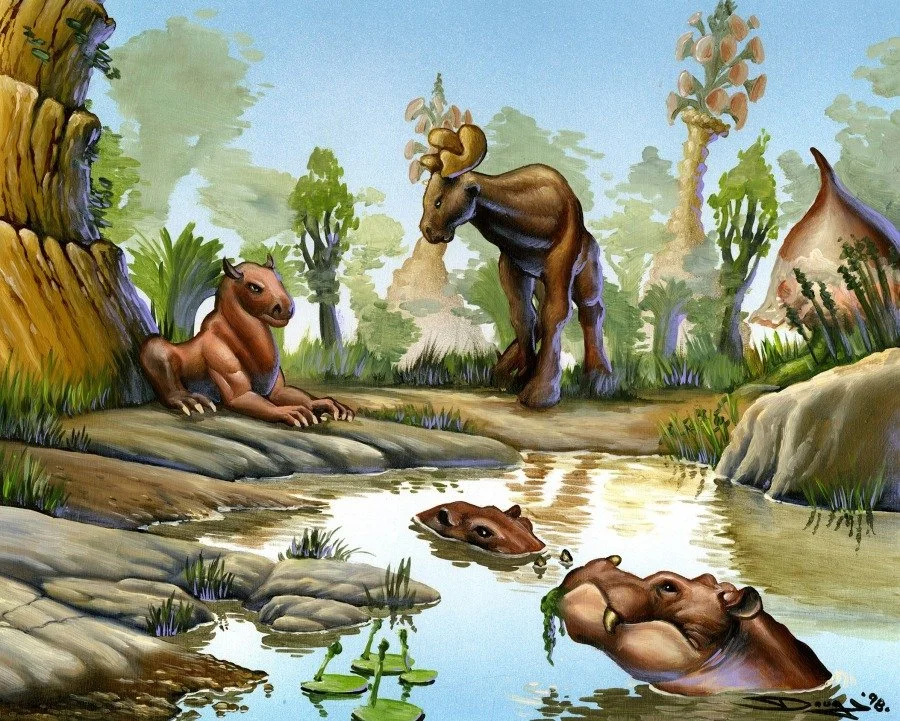
Yavimaya Hollow illustrated by Douglas Shuler
Mana fixing isn’t equal this season— some color combinations will tend to play more proactively in the early turns with Fast Lands while others have access to stronger splashes and pip-intense spells through the Filters later on. All will have access to card advantage and selection through the Bounce Lands and Scry Lands.
Other decks will ignore fixing all together, such as devotion decks running nearly all basics and affinity lists on nearly all colorless sources. Some of these colorless lands will completely define a game, such as a Mirrex presenting an onslaught of mites or a Yavimaya Hollow nullifying many removal spells.
Remember that crafting your mana base is just as important as picking what spells to play. Now that you know what you have access to in Season 11, be sure to refresh yourself on how many lands of each color Frank Karsten recommends to play in any particular deck!