Pressure and Punishment
What’s setting the pace of Season 11?
by Quentin C.
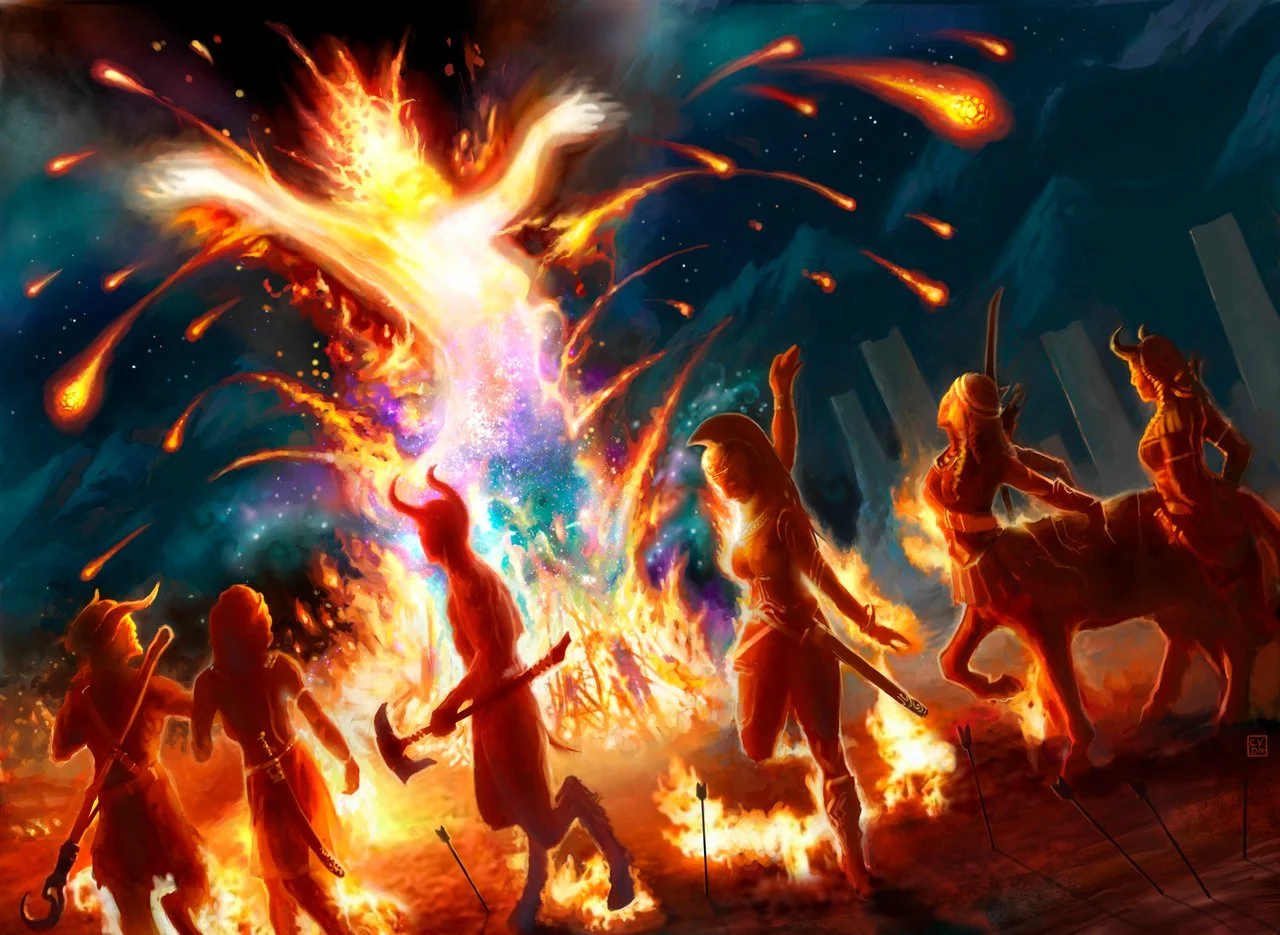
Eidolon of the Great Revel illustrated by Cyril Van Der Haegen
In every season, brewers seek to do more powerful things than one another. However, getting too greedy can leave you vulnerable to something a little lower to the ground and aggressive. Mono-Red tends to be at the end of this chain, lighting a fire for everyone else to react to. Understanding Punisher Burn can deepen our understanding of the format as a whole, showing how other decks try to overpower each other while still respecting what’s setting the tempo of Season 11.
Pressure and Inevitability
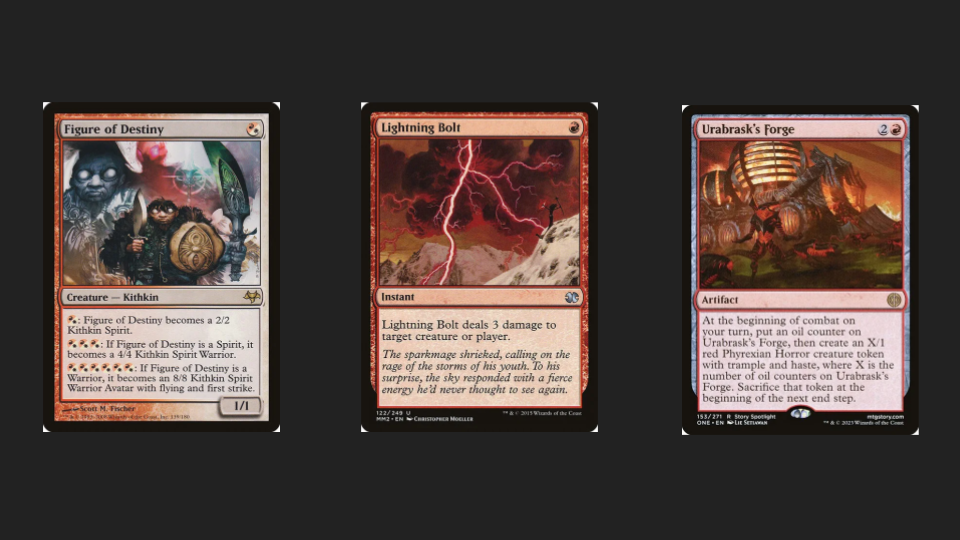
The deck diversifies its threats, each carrying weight throughout the game
Arguably, the largest tone-setting card is Lightning Bolt. As a removal spell, it pressures creatures to have at least four toughness or be powerful enough to demand an answer. Otherwise, a 5 mana Precursor Golem is going to be taken out with a 1 mana answer backed by 4 mana’s worth of pressure. As a burn spell, Lightning Bolt can quickly turn the tide of a damage race despite the boardstate. When a deck with 50 points of direct damage is such an efficient force, life-paying cards like Mana Confluence and Bitterblossom are serious costs to consider in deck construction. This pressures decks to incorporate sustainable life gain or close the game before an inevitable burn out.
Burn’s permanents complement its inevitability, urging players to finish the game with speed. Figure of Destiny and Vindictive Flamestoker not only apply consistent chip damage early on, but are also good topdecks in the late game. Figure of Destiny levels up to become the largest combat object in the meta, while Vindictive Flamestoker is a large reload of resources. Urabrask’s Forge is another meta-defining pressure point, punishing strategies that stall the game with removal.
Punishing Play Patterns
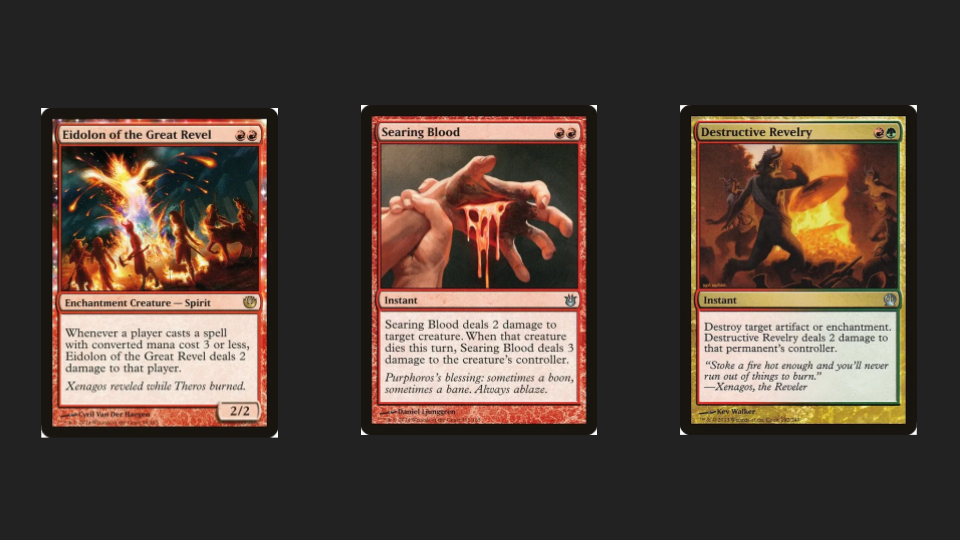
These cards foil the opponent’s plan while still contributing to Burn’s goal
And that’s what Season 11 Burn is all about-- punishing. Decks are punished for not playing to the board quickly enough against Burn, but what if advancing a gameplan was just as painful for Burn’s opponents? This is the philosophy of Eidolon of the Great Revel, Searing Blood, and Destructive Revelry. To keep tempo with Burn, you’ll need to play cheap spells, and Eidolon will make each one sting. Answering the creature hurts, but ignoring it is even more painful. Searing Blood kills powerful creatures like Skrelv, Defector Mite, Vendilion Clique, and Rofellos, Llanowar Emissary while simultaneously being a bolt to the face. Because of how artifact-and-enchantment-heavy Season 11 is, maindeck disenchants like Destructive Revelry always find targets. Besides punishing opponents for trying to attack from a different angle, Revelry efficiently pushes through many maindecked answers to Burn, such as Nyx-Fleece Ram, Spellskite, and Courser of Kruphix.
Sideboard Considerations
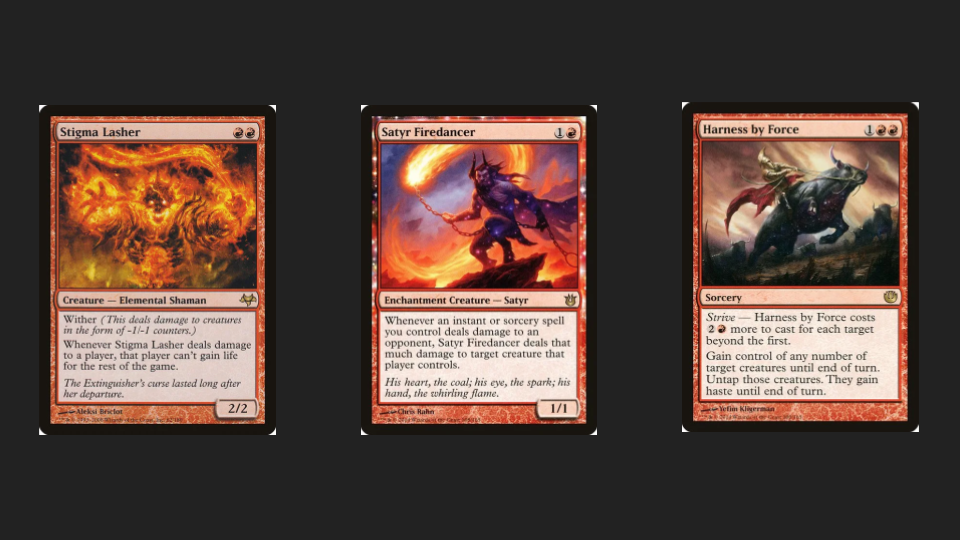
These cards aim to flip the opponent’s plan against them
The sideboard aims to stay one step ahead of the opponent’s counterplay. Stigma Lasher blanks most of Sanctimony, Whip of Erebos, and White Sun’s Twilight while punching through the walls of Nyx-Fleece Ram and Spellskite. Smash to Smithereens works as additional copies of Destructive Revelry in the right matchups. If the opponent looks to streamline their aggression and outrace, Satyr Firedancer keeps the board clear while still closing out the game, and Harness by Force removes a blocker for an amped-up alpha strike.
Conclusion
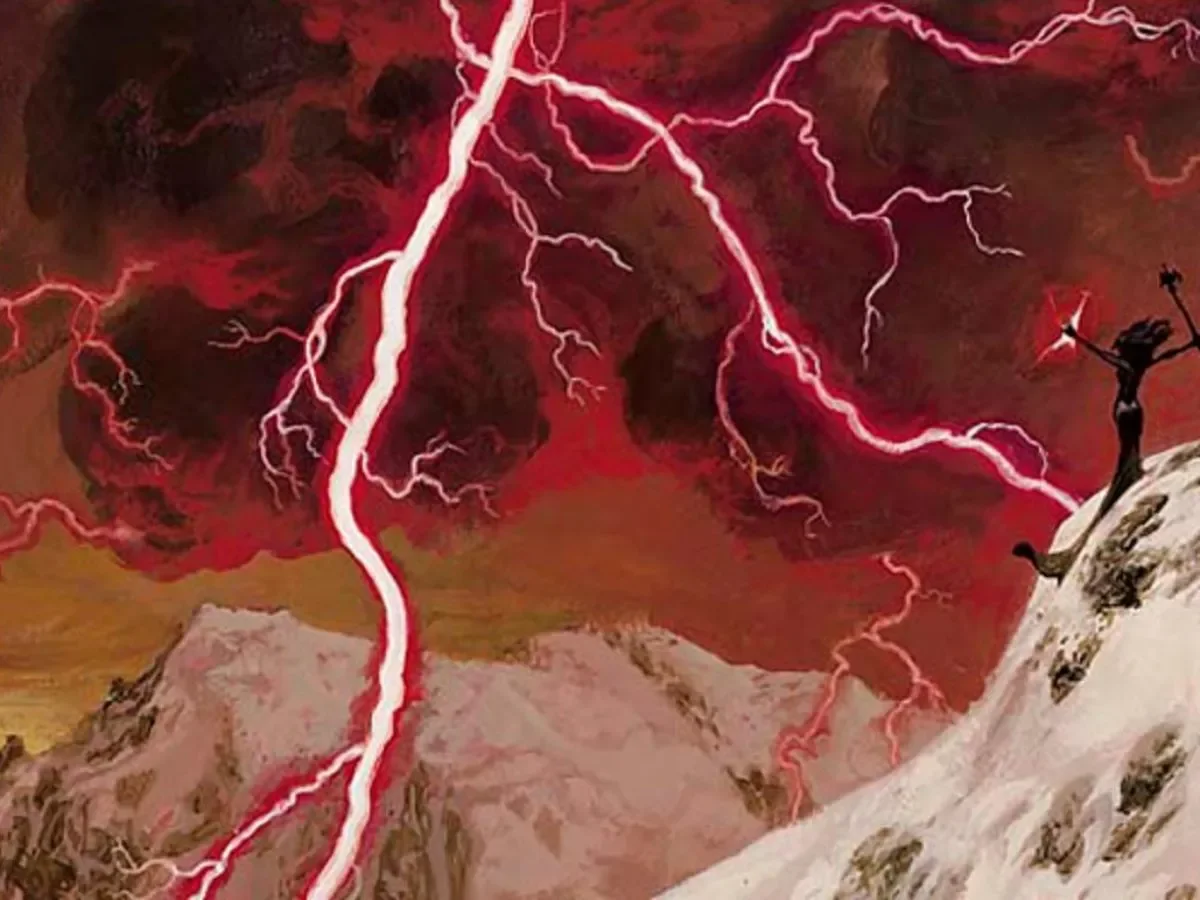
Lightning Bolt illustrated by Christopher Moeller
Every format needs something to set the pace, and Punisher Burn does it for Season 11. With its efficient interaction and quick pressure that doubles as inevitability, it demands that decks finish the game quickly or face the consequences.